Moles, cysts and lipomas can be easily removed by local anesthesia
How it works
Moles
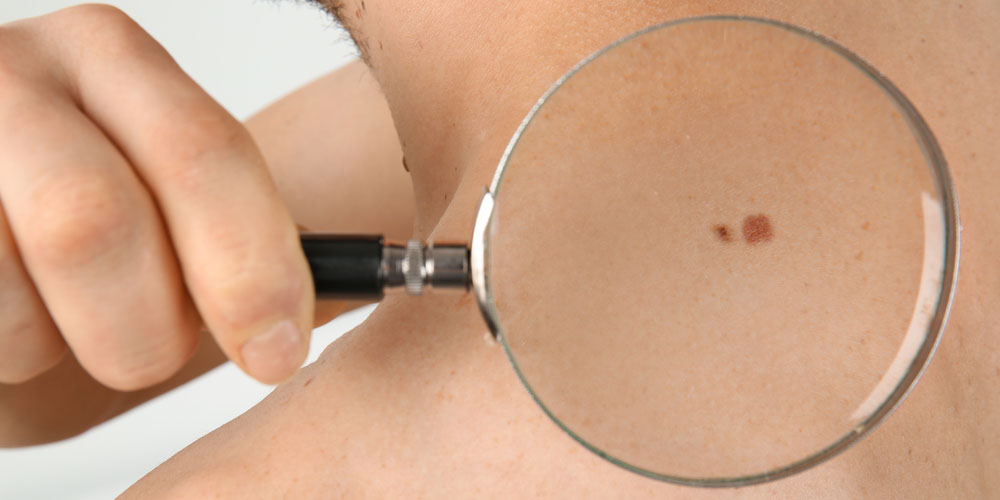
The most common vagus that concerns patients is the intradermal vagina, which is an absolutely benign lesion that creates problems mainly of aesthetic type. It can be removed either by direct excision and stapling or by the technique of shave excision. Mr. Konstantinos Benetatos will discuss the surgical options during your visit, highlighting the positive and negative aspects of each.
Immediate Dissection
The direct excision will leave a straight scar that will have approximately two to three times the width of the vagina. The scar will show a redness for a few weeks, but will heal very well over time.
Shave Excision
With this surgical technique, virtually the vagina is removed in a tangent to the skin, which then heats over about two weeks without the use of sutures. By applying this method, the smallest possible scar is achieved, but there is a thirty percent (30%) for reappearance of the vagina.
Sebaceous Cysts and Stools
It is very common for people to have sebaceous cysts or epidermoid cysts (blocked sebaceous glands as well as papillomas (warts).) Mr. Constantine Benetatos removes these lesions by local sedation.Biocytes usually require a deep cut of the skin in order to remove together with their blocked resource.
Lipomas
The lipids are a class of benign hyperplasia of the adipose tissue of the skin and the subcutaneous tissue. Their presence can be confused with the cysts and is often the cause of anxiety and anxiety for patients. A good clinical examination is the one that will determine the nature of the structure you are concerned with. The removal of fats is primarily done with local anesthesia, except of those that are quite large, so it will probably need to become local with drunkenness.
All of these surgeries have minimal postoperative dangers, including a low chance of bleeding, inflammation, poor scar, and a recurrence of the problem.
The most common vagus that concerns patients is the intradermal vagina, which is an absolutely benign lesion that creates problems mainly of aesthetic type. It can be removed either by direct excision and stapling or by the technique of shave excision. Mr. Konstantinos Benetatos will discuss the surgical options during your visit, highlighting the positive and negative aspects of each.
Immediate Dissection
The direct excision will leave a straight scar that will have approximately two to three times the width of the vagina. The scar will show a redness for a few weeks, but will heal very well over time.
Shave Excision
With this surgical technique, virtually the vagina is removed in a tangent to the skin, which then heats over about two weeks without the use of sutures. By applying this method, the smallest possible scar is achieved, but there is a thirty percent (30%) for reappearance of the vagina.
Sebaceous Cysts and Stools
It is very common for people to have sebaceous cysts or epidermoid cysts (blocked sebaceous glands as well as papillomas (warts).) Mr. Constantine Benetatos removes these lesions by local sedation.Biocytes usually require a deep cut of the skin in order to remove together with their blocked resource.
Lipomas
The lipids are a class of benign hyperplasia of the adipose tissue of the skin and the subcutaneous tissue. Their presence can be confused with the cysts and is often the cause of anxiety and anxiety for patients. A good clinical examination is the one that will determine the nature of the structure you are concerned with. The removal of fats is primarily done with local anesthesia, except of those that are quite large, so it will probably need to become local with drunkenness.
All of these surgeries have minimal postoperative dangers, including a low chance of bleeding, inflammation, poor scar, and a recurrence of the problem.
Anaesthesia
Full anaesthesia
Duration
The length of the procedure depends on the technique to be applied.