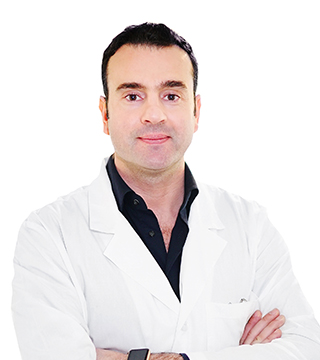
Facelift, or Facial Lymphocytosis, combined with Anemia of the Neck, greatly improves the shape of the jaw and throat area.
How it works
After clinical examination with Doctor Konstantinos Benetatos he can either perform Full-Facelift, a shoth scar facelift or a MACS Lift through of a shorter incision, depending on the needs of each patient.
Why Choose Facelift and Neck Lift?
As the face ages with time, the skin and underlying muscles begin to relax, resulting in loss of skin tone and elasticity. This combined with the effects of the sun and the loss of fat (lipodystrophy) results in the image of old age. Facelift or Face Stretch Fit may partially reverse these changes, especially in the neck and jaw line. This surgery can be combined with fat removal from the neck, with a Blepharoplasty, Forefront / Eyebrow Annihilation, and even with Fat Injections, which will help fill the average person
PRE-TREATMENT PREPARATION
A complete medical history should be taken before each surgery. As a precautionary measure, doctors without prescription or herbal products / drugs should not be taken before surgery and for 3 days afterwards. Also, strict non-steroidal anti-inflammatory drugs such as salospir, ibuprofen (Nurofen), diclofenac and any other anticoagulant or antiplatelet therapy should always be avoided, always with the treating physician. It would also be very helpful to bring a list of any prescription medicines you receive for your preoperative control..
If you are a smoker try to quit smoking at least six weeks before and after a surgery, as this will dramatically reduce the chance of post-operative complications.
If you are a smoker try to quit smoking at least six weeks before and after a surgery, as this will dramatically reduce the chance of post-operative complications.
Recovery
The patient's stay at the Hospital is usually one night, and in rare cases it may take two nights.
Patients will wake up with their face covered sideways with a relatively bulky bandage, which remains for a day. This is removed when the patient leaves the hospital and is replaced by a special facial / head corset, which may need to be kept for two to eight days, depending on the type of surgery. The stitches will be removed from your appointment with Mr. Benetato on the seventh postoperative day and will follow repeated appointments in the month, quarter, semester and time to see your smooth postoperative course.
Patients usually feel able to walk freely within five to seven days and swim in ten to four days (if they have fully recovered) while vigorous exercise (aerobic exercise, etc.) should be avoided for four weeks.
Postoperative Instructions
From the first to the fourth (1-4) day you have to rest!
From fifth to fourteenth (5-14) you will feel much better, as most of the swelling and bruising will recede. After ten days, you will be able to start a mild exercise gradually increasing the volume.
From the third to the sixth week you will be able to return to work from the sixth and then do whatever you want.
Patients should avoid driving until they are completely relieved of pain and feeling of restraint, so they are perfectly able to make a sudden movement, such as direct braking, unobstructed and painless. This is suggested for patients to secure coverage from their insurance company. They may take between two and three weeks to fully recover.
Postoperative Monitoring
Your wound will be checked and will be changed on the second, fifth and seventh postoperative days, and then you will have recurring meetings with Mr. Constantine Benetatos in the month, quarter, semester and year. There will be no extra charge for any post-operative tracking associated with your intervention.
Patients will wake up with their face covered sideways with a relatively bulky bandage, which remains for a day. This is removed when the patient leaves the hospital and is replaced by a special facial / head corset, which may need to be kept for two to eight days, depending on the type of surgery. The stitches will be removed from your appointment with Mr. Benetato on the seventh postoperative day and will follow repeated appointments in the month, quarter, semester and time to see your smooth postoperative course.
Patients usually feel able to walk freely within five to seven days and swim in ten to four days (if they have fully recovered) while vigorous exercise (aerobic exercise, etc.) should be avoided for four weeks.
Postoperative Instructions
From the first to the fourth (1-4) day you have to rest!
From fifth to fourteenth (5-14) you will feel much better, as most of the swelling and bruising will recede. After ten days, you will be able to start a mild exercise gradually increasing the volume.
From the third to the sixth week you will be able to return to work from the sixth and then do whatever you want.
Patients should avoid driving until they are completely relieved of pain and feeling of restraint, so they are perfectly able to make a sudden movement, such as direct braking, unobstructed and painless. This is suggested for patients to secure coverage from their insurance company. They may take between two and three weeks to fully recover.
Postoperative Monitoring
Your wound will be checked and will be changed on the second, fifth and seventh postoperative days, and then you will have recurring meetings with Mr. Constantine Benetatos in the month, quarter, semester and year. There will be no extra charge for any post-operative tracking associated with your intervention.
Possible Complications
Anticorruption / Facelift is a routine surgery and is crowned with absolute success for the overwhelming majority of patients. However, as with any surgery, it is very important to understand that there is a possibility of complications. Any complications that may arise are listed below.
Loss of skin
It is extremely unusual and occurs because the blood supply to the skin is inadequate. The risk is increased if skin removal is excessive (and therefore always avoided), and when patients are heavy smokers.
Paraesthesia / Distorted sensation
of the skin It is quite common after surgery to have a tingling sensation in the surgical area, however the sensation returns to the overwhelming majority of patients within one to two months.
Paraesthesia / Altered sensation of the ear
It is very unusual, but it may arise if a sensory nerve of the skin of the ear is disturbed.
Low Grade Asymmetry
Although the same surgery will be performed on both sides of the face and neck, however, there is a small risk of a small degree of asymmetry on the surface of the skin on both sides. Likewise, the ear lobe may change slightly.
Scars
The quality of scars varies among patients.
Breaking Trauma
Although unusual, it can lead to a delay in wound healing and the creation of poor quality scars.
Hematoma
There is very little chance of creating a hematoma under the skin, which will cause the patient to return to the surgery to remove it if it is too large. However, if the hematoma is to be created, it will occur within the first postoperative 24-hour period and occurs in about one percent (1%) of the patients.
Inflammation
The onset of inflammation is very unusual, but if it occurs, the patient will need to be treated with antibiotic medication.
Nerve injury
Personal nerve injury is very rare, but it can lead to paralysis of the facial muscles. The most affected areas are those of the eyebrows and the mouth. If there is some nerve palsy, it will automatically correct itself for the overwhelming majority of patients after two to three months.
However, some cases of permanent damage have been described, which should be taken seriously before the patient performs the particular surgery.
General Risks of Facial and Neck Surgery
Upper respiratory infections and thrombosis in the foot or lung (DVT or PE). Although rare to appear, it is important to avoid smoking, not being excessively overweight and mobilizing as soon as possible after surgery.
Loss of skin
It is extremely unusual and occurs because the blood supply to the skin is inadequate. The risk is increased if skin removal is excessive (and therefore always avoided), and when patients are heavy smokers.
Paraesthesia / Distorted sensation
of the skin It is quite common after surgery to have a tingling sensation in the surgical area, however the sensation returns to the overwhelming majority of patients within one to two months.
Paraesthesia / Altered sensation of the ear
It is very unusual, but it may arise if a sensory nerve of the skin of the ear is disturbed.
Low Grade Asymmetry
Although the same surgery will be performed on both sides of the face and neck, however, there is a small risk of a small degree of asymmetry on the surface of the skin on both sides. Likewise, the ear lobe may change slightly.
Scars
The quality of scars varies among patients.
Breaking Trauma
Although unusual, it can lead to a delay in wound healing and the creation of poor quality scars.
Hematoma
There is very little chance of creating a hematoma under the skin, which will cause the patient to return to the surgery to remove it if it is too large. However, if the hematoma is to be created, it will occur within the first postoperative 24-hour period and occurs in about one percent (1%) of the patients.
Inflammation
The onset of inflammation is very unusual, but if it occurs, the patient will need to be treated with antibiotic medication.
Nerve injury
Personal nerve injury is very rare, but it can lead to paralysis of the facial muscles. The most affected areas are those of the eyebrows and the mouth. If there is some nerve palsy, it will automatically correct itself for the overwhelming majority of patients after two to three months.
However, some cases of permanent damage have been described, which should be taken seriously before the patient performs the particular surgery.
General Risks of Facial and Neck Surgery
Upper respiratory infections and thrombosis in the foot or lung (DVT or PE). Although rare to appear, it is important to avoid smoking, not being excessively overweight and mobilizing as soon as possible after surgery.
Technique
Full-Facelift / Total Rhytidectomy
Procedure involves removing the skin and fat from the underlying muscles to an extent from the cheek area, the jaw line to the base of the throat. The incision you use extends in front and behind the ear, sometimes extending in the hair. while sometimes along the line of favourites, instead of on the hair itself. Then, the underlying anatomic muscle layer (SMAS-superficial muscoloaponeurotic system) is tightened and suspended at fixed points of the face, which is the most important stage in surgery, as this suspension will also give longevity to your Facelift Subsequently.
Short Scar Facelift Mini Rhytidectomy through a Small Cross section
The Short Scar Facelift comprises a lower section which is generated in front and not behind the ear. Although this operation is carried out just like the operation of Total Face Recovery / Rhytidectomy, however, the extent of skin rectification is smaller, improving mainly the jaw line and, to a lesser extent, the neck area.
MACS Lift | Minimal Access Cranial Suspension Lift
The MACS Lift is nothing short of a variation of the Short Scar Facelift or mini lift where the SMAS layer is suspended in firm anatomical elements of the skull (such as the deep temporal fascia) with strong sutures, thus increasing the longevity of the effect of the lift of the face and neck.
Procedure involves removing the skin and fat from the underlying muscles to an extent from the cheek area, the jaw line to the base of the throat. The incision you use extends in front and behind the ear, sometimes extending in the hair. while sometimes along the line of favourites, instead of on the hair itself. Then, the underlying anatomic muscle layer (SMAS-superficial muscoloaponeurotic system) is tightened and suspended at fixed points of the face, which is the most important stage in surgery, as this suspension will also give longevity to your Facelift Subsequently.
Short Scar Facelift Mini Rhytidectomy through a Small Cross section
The Short Scar Facelift comprises a lower section which is generated in front and not behind the ear. Although this operation is carried out just like the operation of Total Face Recovery / Rhytidectomy, however, the extent of skin rectification is smaller, improving mainly the jaw line and, to a lesser extent, the neck area.
MACS Lift | Minimal Access Cranial Suspension Lift
The MACS Lift is nothing short of a variation of the Short Scar Facelift or mini lift where the SMAS layer is suspended in firm anatomical elements of the skull (such as the deep temporal fascia) with strong sutures, thus increasing the longevity of the effect of the lift of the face and neck.
Anaesthesia
Anaesthetic cream
Duration
The length of the procedure depends on the technique to be applied.